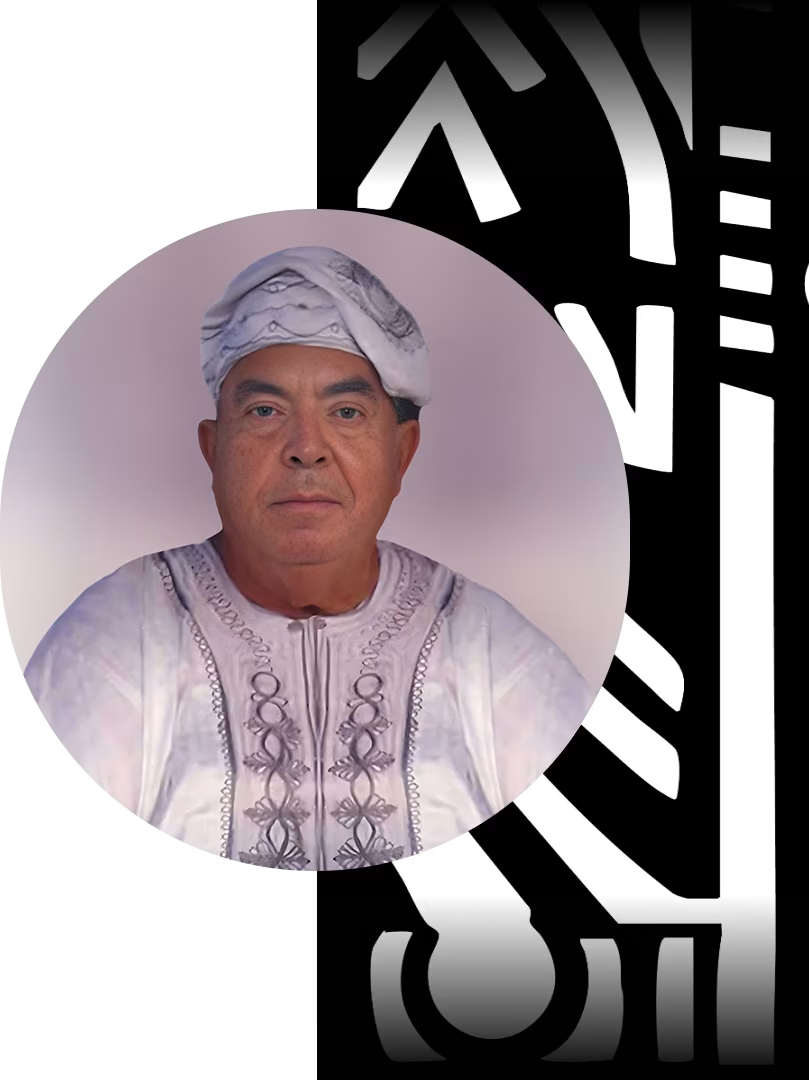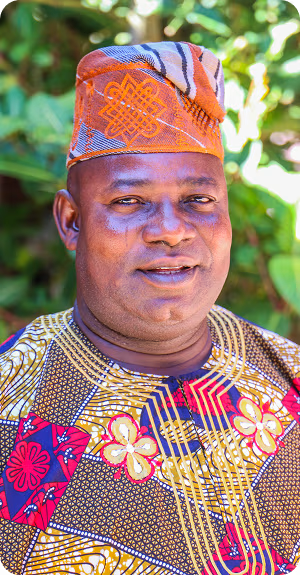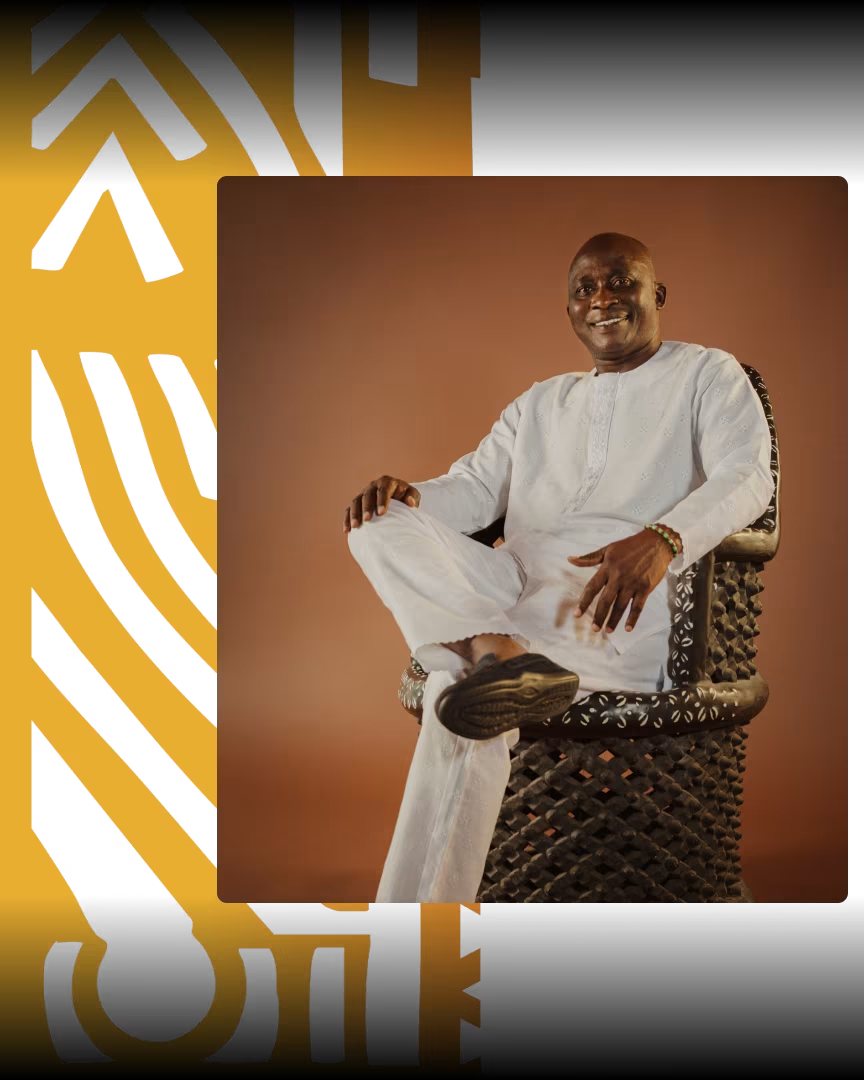
Bàbá King has already conducted over 20,000 oracular consultations using the ẹ́rìndílógún, the divination with sixteen cowries, and several thousand spiritual works, such as ebo rituals, bọri rituals, offerings to the òrìsà, and initiations. He is the main link to the Yoruba priests who come to Brazil annually to, together with him, perform the initiations of thousands of Òrìsà devotees. He leads the Òrìsà worship sessions at the Oduduwa Temple of the Òrìsà, among them Ìyámi Òṣòròngà, Egúngún, and Ifá Ọ̀rúnmìlà. He is a pioneer in bringing back the practice of worshipping Ifá Ọ̀rúnmìlà and Ìyámi Òṣòròngà by bringing to Brazil bàbáláwo Fábùnmi Sówùnmí (in memoriam) and ìyálórìṣà Obimonure Asabi Diyaolu (in memoriam). He has followers in Brazil, Nigeria, Spain, Slovenia, Serbia, Switzerland, England, Canada, Australia, Croatia, Germany, Italy, Portugal, the United States, and other countries. He has taught courses on the divination with cowries to over 10,000 people and courses on Ifá to hundreds of others.


The power and influence of the Oduduwa Temple of the Òrìsà in the Ifá and Ìyámi Òṣòròngà cults in Brazil.
In the late 1980s, the Oduduwa Temple of the Òrìsà began the initiation process in Ifá and Ìyámi Òṣòròngà. Thanks to its numerous disciples, many of whom are Brazilian and foreign priests, who annually bring their children of Òrìsà to be initiated in this house by Yoruba priests, we can proudly count thousands of initiations performed in Ifá Ọ̀rúnmìlà, Ìyámi Òṣòròngà, and numerous other Òrìsà.
This fact undoubtedly gives the Oduduwa Temple of the Orishas the title of the largest temple in the world dedicated to the worship of Ifá Ọ̀rúnmìlà and Ìyámi Òṣòròngà in terms of its number of initiations. We also have a considerable number of people initiated into Ẹgbẹ́, Egúngún, and various other Òrìsà.
The legacy of Professor Dr. Bàbá King in the training of priests
One of the hallmarks of Bàbá King's work is sharing traditional Yoruba knowledge. A pioneer in disseminating this knowledge in Brazil, he has been teaching courses and giving lectures at the Oduduwa Temple of the Òrìsà and the Oduduwa Cultural Center for over thirty-five years.
Ẹgbẹ́ Oduduwa's commitment to teaching the Yoruba language, culture, and traditional religion is an essential part of this trajectory. It exerts a vital influence on the training and strengthening of òrìsà priests, reaffirming the importance of Bàbá King's work as a reference and shaper of generations within the Yoruba tradition.
With locations in Nigeria, Brazil, Slovenia, and Portugal, the Oduduwa Temple of the Òrìsà is led by Bàbá King, a priest, teacher, and researcher of the Yoruba language, culture, and traditional religion. The temple traditionally reveres the òrìsà and reproduces ancient rituals.
Oduduwa worships a wide variety of òrìsà, many of whom were introduced or spread in Brazil and Europe by Oduduwa itself. There are annual initiation seasons in Brazil and Nigeria, with the participation of dozens of Yoruba priests highly specialized in òrìsà such as Èṣù, Ọbalúwayé, Ọ̀ṣun, Oyá, Ṣàngó, Ọbàtálá, Ajé, Ẹgbẹ́, Èṣùmàrè, Ọmọlu, Egúngún, Gẹ̀lẹ̀dẹ̀, Ìyámi Òṣòròngà, Àjàgùnmàlè, Ọṣè, Olójó, Oké, Èla, Eiye, and Ọ̀ṣùpá, among many others.
Some of these initiations can only be performed in Nigeria, due to specific requirements and ritualistic characteristics that need the original traditional context.
Learn below about the òrìsà worshipped by Oduduwa, their àṣẹ, and their main individual characteristics:
Àjàgùnmàlè is the òrìsà of personal, professional, and spiritual leadership. He connects the visible to the invisible and masters magical-medicinal practices (òògùn). He fosters self-confidence, emotional maturity, and wise discernment about life’s issues. He is both ‘olúwo olódè ọ̀run,’ the supreme priest of the spiritual realm, and ‘olúwo olódè aiyé,’ the supreme priest of the physical world. His symbol is the akalamagbo, a sacred bird with great spiritual power.
Check out further informationAjé means “shell,” “money,” and “Progress for you” or “Success for you.” Ajé is the female òrìsà of wealth, prosperity, and the progress of both men and òrìsà, possessing the àṣẹ to make the achievements of all beings recognized and to bring fortune through work. She blesses generosity but teaches not to mistreat money or waste it. She resides only in homes with harmonious relationships and among people who love work and show gratitude. Her worship is directed towards joy and well-being, and the first offering to her is the attitude of serving with enthusiasm and love, as progress is associated with socialization.
Check out further informationThe word Ẹgbẹ́, which can be translated as ‘Society of Spiritual Friends’ or ‘Society of Friendly Spirits,’ designates both an òrìsà and a corporation of spiritual beings. This corporation is comprised of members of ẹgbẹ́ aye (friends of the visible world) and friends of ẹgbẹ́ òrún (friends of the invisible world or spiritual friends). He is the òrìsà protector of the àbíkú and is worshipped to prevent premature or violent death. Ẹgbẹ́ òrún brings stability, good quality of life, and achievements to ẹgbẹ́ ayé, because everything that happens in the visible world also occurs in the invisible world. Ẹgbẹ́ promotes a stable, happy, healthy, and prosperous life; encourages the practice of kindness, and fosters peace among people.
Check out further informationEgúngún symbolizes generative power and ancestral male power. The word Egúngún designates both an òrìsà and a corporation of spiritual beings, comprising venerable male ancestors from a specific family and from all of humanity. The Ẹgbẹ́ Egúngún, a collective of venerable ancestors of the male lineage, has the vital responsibility of neutralizing negative burdens arising from the physical, emotional, and spiritual burdens people inherit from their ancestors.
Check out further informationErinlẹ̀, the òrìsà of hunting, war, strategy, fertility, family matters, magical-medicinal practices (òògùn), and wisdom, is among the first disciples of Ògún in the arts of hunting and war and among the first disciples of Ọ̀sányìn in the practices of òògùn. She/he is considered a female òrìsà in some regions and a male òrìsà in others. One of Erinlẹ̀'s symbols is an elephant on the ground, representing the most extraordinary power that exists on Earth. Agile and elegant, persevering in any situation, she is always victorious.
Check out further informationOne of the primordial òrìsà, Èṣù is the òrìsà of order, discipline, organization, and patience, messenger of the òrìsà and conveyor of àṣẹ. As an inspector of rituals, he receives attention before the rituals begin so that energies can flow correctly and prepares the orí of his worshippers so that they may receive the àṣẹ of the òrìsà and use it wisely. A great strategist, his faithfulness to words and truth, his reasonableness, his thoughtfulness, and his discernment give him the ability to make decisions based on justice and wisdom. Èṣù is the guardian of everything in the universe, including the values and virtues of Yoruba ethics and the organization of humans and all beings of nature.
Check out further informationÈṣùmàrè favors communication, transformation, aesthetics, self-defense, and magic, being the patron of these areas. This òrìsà promotes transitions between Òrun and Ayé, as well as between human beings and nature. He harmonizes people's time, makes them more visible and noticeable to the world, and personifies justice, loyalty, and honesty.
Check out further informationEwa is an 'Elderly and Respectable Mother' directly related to the Ìyámi Òṣòròngà. A warrior with healing and transformation powers, she's maternal and welcoming, always attentive to human suffering; she transforms pain into joy. Focused on manual activities and endowed with creativity and aesthetic sense, she makes her devotees prominent. She renews their energies, enables them to embody feminine power, and helps them overcome their fears and improve their vision. Ewa deals with ambition, vitality, and sexuality.
Check out further informationThe word Gẹ̀lẹ̀dẹ̀ simultaneously designates an òrìsà, a corporation of spiritual beings, and the cult of female ancestors. The Gẹ̀lẹ̀dẹ̀ Society, comprised of men and women, aims to facilitate the expression of sacred feminine powers, promote fertility, reinforce social norms of conduct, and attract àṣẹ. The society is led by the erelú, women who possess the secrets and powers of Ìyámi Òṣòròngà. The àṣẹ of Gẹ̀lẹ̀dẹ̀ favors the achievement of personal and collective goals, harmonizes conflicts between generations, promotes healing, and brings protection, fertility, unity, wisdom, and understanding.
Check out further informationSome myths describe Yemọja as the wife of Òrànmíyàn, a descendant of Oduduwa and the mythical founder of Oyo, with whom she is said to have conceived Ṣàngó. She is also considered the mother of many other òrìsà, including Ògún and Òṣun. Her name, comprised of ‘ye’ (“mother”), ‘ọmọ’ (“son”), and ‘ẹja’ (“fish”), means “Mother of the fish children.” More related to the power of procreation than to pregnancy, Yemọja is the Lady of all waters. Associated with fertility, procreation, and the power of Ìyámi Òṣòròngà, this Iyagba of motherhood, celebration of life, maturity, and serenity — gives support to people’s Orí to enable them to develop a strong and balanced personality.
Check out further informationÌbéji is one of the òrìsà who protect children and young people. It guards against premature death and failure, reduces suffering, and harmonizes the spiritual and material aspects of its worshippers' lives.
Check out further informationIfá Ọ̀rúnmìlà is one of the primordial òrìsà and the òrìsà of wisdom and destiny. Patron of divination, he brought the Ifá divination system from Òrun to Ayé; it is consulted through ikin and the opelé chain. He also brought the Ifá literary corpus, one of the main repositories of traditional Yoruba knowledge. It is worth noting that UNESCO protects the literary corpus as an intangible cultural heritage of humanity.
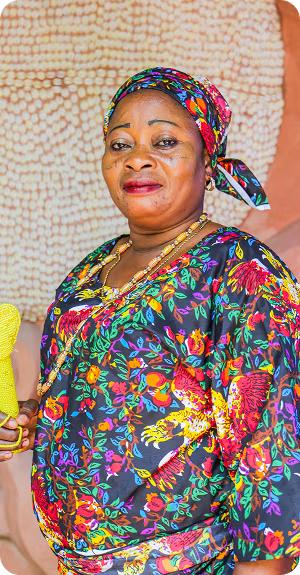
Check out further informationÌyámi Òṣòròngà personifies ancestral feminine power, female generative power, and the mystical elements of women in their protective and nurturing aspects. The female ancestors, the Iyagba or Ìyámi, hold this power and are worshipped in societies such as Eléyè, Ògbóni, and Gẹ̀lẹ̀dẹ̀, which transmit their knowledge only to initiates. A quintessential feminine symbol, the Ìyámi are the oldest force on Earth and existed long before humanity; sacred and venerable matriarchs, guardians of the vital force of beings, they are so integrated into the universe that one cannot worship the òrìsà without their presence. They symbolize motherhood, responsibility, and wisdom.
Check out further informationLógun Ẹdẹ, ‘Warrior of the city of Edé,’ located in Osun State, Nigeria, is the patron of hunting, strategy, leadership, and wealth. A mythical son and apprentice of Ọ̀ṣọ́ọ̀sì, considered a leader among the òrìsà, Lógun Ẹdẹ is a warrior and hunter with focus, precision, concentration, strategic skills, intuition, perception, and courage. Worshipped to attract agility, progress, good luck in business, and brilliance in life, he symbolizes sweetness, sensuality, love, and emotional balance.
Check out further informationNana Bùrúkù is considered particularly powerful because she is the daughter of the Supreme Being himself. She is also called Ọmọlu (Ọmọlu, a contraction of ‘ọmọ,’ “son,” and ‘Olúwa,’ “God”), “Daughter of God.” Among the Yoruba, her masculine aspect is called Buruku, and her feminine aspect is Ọmọlu. Considered the oldest Iyagba, Nana Buruku governs clay and swamps. She is responsible for the cyclical replacement of souls and the raw material of bodies: her participation in the processes of birth and death is fundamental. Ọmọlu symbolizes discipline, secrets, and spiritual power. Her àṣẹ harmonizes the feminine and masculine energies within us and outside of us.
Check out further informationỌbà is linked to emotional stability and possesses the òrìsààṣẹ of self-discipline. She’s calm, compliant, kind, generous, and maternal, thus, making the Orí more tolerant and satisfied with life.
Check out further informationThe word Ọbalúwaiyé, a contraction of ‘Ọba-olúwa-aiyé,’ means ‘King who is the Lord of the Earth.’ Ọbalúwaiyé, the patron of illness, healing, and health, constantly protects us from death. He fights against evil magic and, since he is a great connoisseur of the body and its potential problems, increases physical resistance. Lord of the Earth and all that is in it, Ọbalúwaiyé also possesses the àṣẹ of discipline, self-discipline, and divination.
Check out further informationỌbàtálá is the contraction of ‘Ọba-tí-o-nlá,’ ‘King who is great,’ or ‘Ọba-tí-àlà,’ ‘King in white robes,’ ‘King of Purity,’ Ọbàtálá or Òrìṣànlá is the primordial òrìsà who shapes human bodies and is the patron of patience, creativity, peace, tranquility, purity, a stable mind, transformation, truth, and of the ability to understand and accept reality. He is considered particularly selective in choosing his worshipers.
Check out further informationOduduwa appears in myths sometimes as the Iyagba who created the Earth, and sometimes as the human patriarch of the Yoruba dynasties, deified after death. According to myth, he and his followers settled in Ilé-Ifé, the spiritual homeland of the Yoruba and the site of the world's creation, where Oduduwa became the first king. He is linked to the beginnings of existence and, according to these narratives, actively participated in creation. All Yoruba kings consider themselves direct descendants of the patriarch Oduduwa, who they regard as the spiritual guardian of the òrìsà philosophy. Oduduwa helps his devotees understand and appease their Òrìṣànlá character, become better people, awaken their potential, value time, be more dignified, and learn not to become tired of themselves.
Check out further informationOlojó is the òrìsà of time and cycles. We cannot control time, but we can have the wisdom to adapt to it. Olojó helps us understand time, minimize its negative effects, and enhance its positive impact. Understanding the dynamics of time allows us to improve our relationship with it, optimize it, and make it more productive and favorable for achieving our dreams and personal and material accomplishments. Olojó should be greeted daily, upon waking, so that the day flows well and favors all other aspects of life.
Check out further informationThe primordial òrìsà Ògún governs metals, forging, technology, civilization, war, fire, hunting, progress, innovation, agriculture, strategy, paths, motivation, determination, and generosity. This òrìsà, who draws marks on the palms of his hands, civilized human beings and taught them to use natural resources for their livelihoods. He gives his worshippers courage and persistence, shows them the path to progress, protects them against misfortune, and awakens hope in them. His symbols include all objects made by blacksmiths.
Check out further informationThe word Orí designates the origin of beings, predestination, the head, and each individual’s personal òrìsà. He accompanies, guides, and helps beings before their birth, during life, and after death. Orí is the most important òrìsà in the Yoruba pantheon, because a person only receives what their Orí approves, even given the efforts of other òrìsà. When a person's Orí is well, their entire being will be in good condition. Therefore, like the other òrìsà, Orí is worshipped with offerings and prayers, songs and greetings. Orí also appreciates the practice of virtues such as patience, willingness to serve, and upright character, which favor the acquisition of values such as long life, health, numerous offspring, and prosperity in all aspects of life.
Check out further informationỌ̀sányìn, patron of the essence of the plant kingdom and guardian of the àṣẹ of flora, governs the òògùn, magical-medicinal practices, and divination with magic. Like Èṣù, he is an essential companion of Ifá Ọ̀rúnmìlà. Plants, critical to life and the worship of the òrìsà, are used as a food, liturgical, magical, or medicinal resource. Since Ọ̀sányìn governs them, the authorization to activate their power, which is in a latent state, depends on him. Therefore, one must invoke him whenever a leaf is harvested and processed, so that the òrìsà preserves its vital essence. This òrìsà places his knowledge at the service of the other òrìsà and human beings.
Check out further informationÒṣọ́ọ̀sí, the òrìsà of the forest, hunting, precision, and war, as well as patron of hunters, is associated with strategic ability, intuition, and keen perception. An apprentice of Ògún in the arts of hunting and war, he knows all the languages of the forest and all the beings that live in it. He synchronizes the rhythm of his worshippers and helps them to accurately assess each situation so that they can achieve their goals.
Check out further informationỌ̀ṣun, the òrìsà of love, elegance, seduction, rivers and fresh waters, precious metals, fertility, progress, and prosperity, is the protector of sensuality and human sexuality. She is also the Iyagba of wisdom and the mother of the divination with 16 cowries. She provides biological, mental, emotional, and material fertility.
Check out further informationOya, the òrìsà of winds, storms, and tornadoes, is known in Brazil as Iansã, a word that perhaps derives from the expression ‘Ọya Mẹsan’ (“Oya of the nine parts”), as the number nine is closely associated with her. She’s the wife of Ṣàngó, the òrìsà of lightning, thunder, and justice; the Niger River is dedicated to her. Known for her courage and boldness, her dynamic àṣẹ makes her elegant, confident, and trustworthy. Connected to fire and the energies of transformation and justice, she symbolizes courage, seriousness, responsibility, and loyalty.
Check out further informationṢàngó, the òrìsà of lightning, thunder, fire, courage, leadership, and justice. He’s the fourth king of Oyo, who became one of the most worshipped òrìsà on the African continent and in countries of the diaspora. Considered fierce, generous, and a provider of children, money, healing, and especially justice, Ṣàngó abhors falsehood, lies, the use of magic for evil, and theft. He is a symbol of power and victory.
Check out further informationAbàmòdá | Aganjú | Agẹmọ | Agbá-ilé / Agbà-ilẹ̀ | Akógun | Alábé | Aláàṣẹ | Arọ̀ní | Ayán / Ayángalú | Báyẹ̀mí (aprox.) | Dàdá | Elúkú | Erin | Ẹyẹ | Èkùn | Ẹ̀là | Eléèyẹ | Ìgún | Ìgún-ń-kọ | Ìrókò | Jẹbọ-dá (aprox.) | Ké bí àṣẹ | Kọ̀rí | Lógọ́lógọ́ (aprox.) | Oguríyan (hipótese) | Onílẹ̀ | Olódè | Ọ̀ṣàlùfàn | Ọ̀ṣé | Òdù | Ògúè | Ọ̀kè | Ọ̀kọ́ | Olókun | Olóṣà | Olódò | Olúbọn Ògún | Olúmọ̀ | Ọ̀run | Òrànmíyàn | Òrò | Òṣù (aprox.) | Ọ̀ṣùpá | Òjó | Onímálẹ̀-Òdò | Ṣàṣárà | Ṣàṣàrà
Check out further informationÀjàgùnmàlè is the òrìsà of personal, professional, and spiritual leadership. He connects the visible to the invisible and masters magical-medicinal practices (òògùn). He fosters self-confidence, emotional maturity, and wise discernment about life’s issues. He is both ‘olúwo olódè ọ̀run,’ the supreme priest of the spiritual realm, and ‘olúwo olódè aiyé,’ the supreme priest of the physical world. His symbol is the akalamagbo, a sacred bird with great spiritual power.
Check out further informationAjé means “shell,” “money,” and “Progress for you” or “Success for you.” Ajé is the female òrìsà of wealth, prosperity, and the progress of both men and òrìsà, possessing the àṣẹ to make the achievements of all beings recognized and to bring fortune through work. She blesses generosity but teaches not to mistreat money or waste it. She resides only in homes with harmonious relationships and among people who love work and show gratitude. Her worship is directed towards joy and well-being, and the first offering to her is the attitude of serving with enthusiasm and love, as progress is associated with socialization.
Check out further informationThe word Ẹgbẹ́, which can be translated as ‘Society of Spiritual Friends’ or ‘Society of Friendly Spirits,’ designates both an òrìsà and a corporation of spiritual beings. This corporation is comprised of members of ẹgbẹ́ aye (friends of the visible world) and friends of ẹgbẹ́ òrún (friends of the invisible world or spiritual friends). He is the òrìsà protector of the àbíkú and is worshipped to prevent premature or violent death. Ẹgbẹ́ òrún brings stability, good quality of life, and achievements to ẹgbẹ́ ayé, because everything that happens in the visible world also occurs in the invisible world. Ẹgbẹ́ promotes a stable, happy, healthy, and prosperous life; encourages the practice of kindness, and fosters peace among people.
Check out further informationEgúngún symbolizes generative power and ancestral male power. The word Egúngún designates both an òrìsà and a corporation of spiritual beings, comprising venerable male ancestors from a specific family and from all of humanity. The Ẹgbẹ́ Egúngún, a collective of venerable ancestors of the male lineage, has the vital responsibility of neutralizing negative burdens arising from the physical, emotional, and spiritual burdens people inherit from their ancestors.
Check out further informationErinlẹ̀, the òrìsà of hunting, war, strategy, fertility, family matters, magical-medicinal practices (òògùn), and wisdom, is among the first disciples of Ògún in the arts of hunting and war and among the first disciples of Ọ̀sányìn in the practices of òògùn. She/he is considered a female òrìsà in some regions and a male òrìsà in others. One of Erinlẹ̀'s symbols is an elephant on the ground, representing the most extraordinary power that exists on Earth. Agile and elegant, persevering in any situation, she is always victorious.
Check out further informationOne of the primordial òrìsà, Èṣù is the òrìsà of order, discipline, organization, and patience, messenger of the òrìsà and conveyor of àṣẹ. As an inspector of rituals, he receives attention before the rituals begin so that energies can flow correctly and prepares the orí of his worshippers so that they may receive the àṣẹ of the òrìsà and use it wisely. A great strategist, his faithfulness to words and truth, his reasonableness, his thoughtfulness, and his discernment give him the ability to make decisions based on justice and wisdom. Èṣù is the guardian of everything in the universe, including the values and virtues of Yoruba ethics and the organization of humans and all beings of nature.
Check out further informationÈṣùmàrè favors communication, transformation, aesthetics, self-defense, and magic, being the patron of these areas. This òrìsà promotes transitions between Òrun and Ayé, as well as between human beings and nature. He harmonizes people's time, makes them more visible and noticeable to the world, and personifies justice, loyalty, and honesty.
Check out further informationEwa is an 'Elderly and Respectable Mother' directly related to the Ìyámi Òṣòròngà. A warrior with healing and transformation powers, she's maternal and welcoming, always attentive to human suffering; she transforms pain into joy. Focused on manual activities and endowed with creativity and aesthetic sense, she makes her devotees prominent. She renews their energies, enables them to embody feminine power, and helps them overcome their fears and improve their vision. Ewa deals with ambition, vitality, and sexuality.
Check out further informationThe word Gẹ̀lẹ̀dẹ̀ simultaneously designates an òrìsà, a corporation of spiritual beings, and the cult of female ancestors. The Gẹ̀lẹ̀dẹ̀ Society, comprised of men and women, aims to facilitate the expression of sacred feminine powers, promote fertility, reinforce social norms of conduct, and attract àṣẹ. The society is led by the erelú, women who possess the secrets and powers of Ìyámi Òṣòròngà. The àṣẹ of Gẹ̀lẹ̀dẹ̀ favors the achievement of personal and collective goals, harmonizes conflicts between generations, promotes healing, and brings protection, fertility, unity, wisdom, and understanding.
Check out further informationSome myths describe Yemọja as the wife of Òrànmíyàn, a descendant of Oduduwa and the mythical founder of Oyo, with whom she is said to have conceived Ṣàngó. She is also considered the mother of many other òrìsà, including Ògún and Òṣun. Her name, comprised of ‘ye’ (“mother”), ‘ọmọ’ (“son”), and ‘ẹja’ (“fish”), means “Mother of the fish children.” More related to the power of procreation than to pregnancy, Yemọja is the Lady of all waters. Associated with fertility, procreation, and the power of Ìyámi Òṣòròngà, this Iyagba of motherhood, celebration of life, maturity, and serenity — gives support to people’s Orí to enable them to develop a strong and balanced personality.
Check out further informationÌbéji is one of the òrìsà who protect children and young people. It guards against premature death and failure, reduces suffering, and harmonizes the spiritual and material aspects of its worshippers' lives.
Check out further informationIfá Ọ̀rúnmìlà is one of the primordial òrìsà and the òrìsà of wisdom and destiny. Patron of divination, he brought the Ifá divination system from Òrun to Ayé; it is consulted through ikin and the opelé chain. He also brought the Ifá literary corpus, one of the main repositories of traditional Yoruba knowledge. It is worth noting that UNESCO protects the literary corpus as an intangible cultural heritage of humanity.
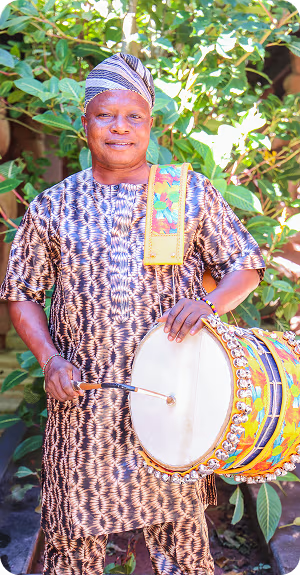
Check out further informationÌyámi Òṣòròngà personifies ancestral feminine power, female generative power, and the mystical elements of women in their protective and nurturing aspects. The female ancestors, the Iyagba or Ìyámi, hold this power and are worshipped in societies such as Eléyè, Ògbóni, and Gẹ̀lẹ̀dẹ̀, which transmit their knowledge only to initiates. A quintessential feminine symbol, the Ìyámi are the oldest force on Earth and existed long before humanity; sacred and venerable matriarchs, guardians of the vital force of beings, they are so integrated into the universe that one cannot worship the òrìsà without their presence. They symbolize motherhood, responsibility, and wisdom.
Check out further informationLógun Ẹdẹ, ‘Warrior of the city of Edé,’ located in Osun State, Nigeria, is the patron of hunting, strategy, leadership, and wealth. A mythical son and apprentice of Ọ̀ṣọ́ọ̀sì, considered a leader among the òrìsà, Lógun Ẹdẹ is a warrior and hunter with focus, precision, concentration, strategic skills, intuition, perception, and courage. Worshipped to attract agility, progress, good luck in business, and brilliance in life, he symbolizes sweetness, sensuality, love, and emotional balance.
Check out further informationNana Bùrúkù is considered particularly powerful because she is the daughter of the Supreme Being himself. She is also called Ọmọlu (Ọmọlu, a contraction of ‘ọmọ,’ “son,” and ‘Olúwa,’ “God”), “Daughter of God.” Among the Yoruba, her masculine aspect is called Buruku, and her feminine aspect is Ọmọlu. Considered the oldest Iyagba, Nana Buruku governs clay and swamps. She is responsible for the cyclical replacement of souls and the raw material of bodies: her participation in the processes of birth and death is fundamental. Ọmọlu symbolizes discipline, secrets, and spiritual power. Her àṣẹ harmonizes the feminine and masculine energies within us and outside of us.
Check out further informationỌbà is linked to emotional stability and possesses the òrìsààṣẹ of self-discipline. She’s calm, compliant, kind, generous, and maternal, thus, making the Orí more tolerant and satisfied with life.
Check out further informationThe word Ọbalúwaiyé, a contraction of ‘Ọba-olúwa-aiyé,’ means ‘King who is the Lord of the Earth.’ Ọbalúwaiyé, the patron of illness, healing, and health, constantly protects us from death. He fights against evil magic and, since he is a great connoisseur of the body and its potential problems, increases physical resistance. Lord of the Earth and all that is in it, Ọbalúwaiyé also possesses the àṣẹ of discipline, self-discipline, and divination.
Check out further informationỌbàtálá is the contraction of ‘Ọba-tí-o-nlá,’ ‘King who is great,’ or ‘Ọba-tí-àlà,’ ‘King in white robes,’ ‘King of Purity,’ Ọbàtálá or Òrìṣànlá is the primordial òrìsà who shapes human bodies and is the patron of patience, creativity, peace, tranquility, purity, a stable mind, transformation, truth, and of the ability to understand and accept reality. He is considered particularly selective in choosing his worshipers.
Check out further informationOduduwa appears in myths sometimes as the Iyagba who created the Earth, and sometimes as the human patriarch of the Yoruba dynasties, deified after death. According to myth, he and his followers settled in Ilé-Ifé, the spiritual homeland of the Yoruba and the site of the world's creation, where Oduduwa became the first king. He is linked to the beginnings of existence and, according to these narratives, actively participated in creation. All Yoruba kings consider themselves direct descendants of the patriarch Oduduwa, who they regard as the spiritual guardian of the òrìsà philosophy. Oduduwa helps his devotees understand and appease their Òrìṣànlá character, become better people, awaken their potential, value time, be more dignified, and learn not to become tired of themselves.
Check out further informationOlojó is the òrìsà of time and cycles. We cannot control time, but we can have the wisdom to adapt to it. Olojó helps us understand time, minimize its negative effects, and enhance its positive impact. Understanding the dynamics of time allows us to improve our relationship with it, optimize it, and make it more productive and favorable for achieving our dreams and personal and material accomplishments. Olojó should be greeted daily, upon waking, so that the day flows well and favors all other aspects of life.
Check out further informationThe primordial òrìsà Ògún governs metals, forging, technology, civilization, war, fire, hunting, progress, innovation, agriculture, strategy, paths, motivation, determination, and generosity. This òrìsà, who draws marks on the palms of his hands, civilized human beings and taught them to use natural resources for their livelihoods. He gives his worshippers courage and persistence, shows them the path to progress, protects them against misfortune, and awakens hope in them. His symbols include all objects made by blacksmiths.
Check out further informationThe word Orí designates the origin of beings, predestination, the head, and each individual’s personal òrìsà. He accompanies, guides, and helps beings before their birth, during life, and after death. Orí is the most important òrìsà in the Yoruba pantheon, because a person only receives what their Orí approves, even given the efforts of other òrìsà. When a person's Orí is well, their entire being will be in good condition. Therefore, like the other òrìsà, Orí is worshipped with offerings and prayers, songs and greetings. Orí also appreciates the practice of virtues such as patience, willingness to serve, and upright character, which favor the acquisition of values such as long life, health, numerous offspring, and prosperity in all aspects of life.
Check out further informationỌ̀sányìn, patron of the essence of the plant kingdom and guardian of the àṣẹ of flora, governs the òògùn, magical-medicinal practices, and divination with magic. Like Èṣù, he is an essential companion of Ifá Ọ̀rúnmìlà. Plants, critical to life and the worship of the òrìsà, are used as a food, liturgical, magical, or medicinal resource. Since Ọ̀sányìn governs them, the authorization to activate their power, which is in a latent state, depends on him. Therefore, one must invoke him whenever a leaf is harvested and processed, so that the òrìsà preserves its vital essence. This òrìsà places his knowledge at the service of the other òrìsà and human beings.
Check out further informationÒṣọ́ọ̀sí, the òrìsà of the forest, hunting, precision, and war, as well as patron of hunters, is associated with strategic ability, intuition, and keen perception. An apprentice of Ògún in the arts of hunting and war, he knows all the languages of the forest and all the beings that live in it. He synchronizes the rhythm of his worshippers and helps them to accurately assess each situation so that they can achieve their goals.
Check out further informationỌ̀ṣun, the òrìsà of love, elegance, seduction, rivers and fresh waters, precious metals, fertility, progress, and prosperity, is the protector of sensuality and human sexuality. She is also the Iyagba of wisdom and the mother of the divination with 16 cowries. She provides biological, mental, emotional, and material fertility.
Check out further informationOya, the òrìsà of winds, storms, and tornadoes, is known in Brazil as Iansã, a word that perhaps derives from the expression ‘Ọya Mẹsan’ (“Oya of the nine parts”), as the number nine is closely associated with her. She’s the wife of Ṣàngó, the òrìsà of lightning, thunder, and justice; the Niger River is dedicated to her. Known for her courage and boldness, her dynamic àṣẹ makes her elegant, confident, and trustworthy. Connected to fire and the energies of transformation and justice, she symbolizes courage, seriousness, responsibility, and loyalty.
Check out further informationṢàngó, the òrìsà of lightning, thunder, fire, courage, leadership, and justice. He’s the fourth king of Oyo, who became one of the most worshipped òrìsà on the African continent and in countries of the diaspora. Considered fierce, generous, and a provider of children, money, healing, and especially justice, Ṣàngó abhors falsehood, lies, the use of magic for evil, and theft. He is a symbol of power and victory.
Check out further informationAbàmòdá | Aganjú | Agẹmọ | Agbá-ilé / Agbà-ilẹ̀ | Akógun | Alábé | Aláàṣẹ | Arọ̀ní | Ayán / Ayángalú | Báyẹ̀mí (aprox.) | Dàdá | Elúkú | Erin | Ẹyẹ | Èkùn | Ẹ̀là | Eléèyẹ | Ìgún | Ìgún-ń-kọ | Ìrókò | Jẹbọ-dá (aprox.) | Ké bí àṣẹ | Kọ̀rí | Lógọ́lógọ́ (aprox.) | Oguríyan (hipótese) | Onílẹ̀ | Olódè | Ọ̀ṣàlùfàn | Ọ̀ṣé | Òdù | Ògúè | Ọ̀kè | Ọ̀kọ́ | Olókun | Olóṣà | Olódò | Olúbọn Ògún | Olúmọ̀ | Ọ̀run | Òrànmíyàn | Òrò | Òṣù (aprox.) | Ọ̀ṣùpá | Òjó | Onímálẹ̀-Òdò | Ṣàṣárà | Ṣàṣàrà
Check out further informationThe Yoruba bàbálórìṣà Adéṣínà Síkírù Sàlámì, Bàbá King, our spiritual father, mentor, and guide, was born in Abeokuta, Nigeria. He dedicates his life to the òrìṣà and has become a notable priest and an eminent academic researcher of Yoruba culture...
Check out further informationÌyálórìṣà Ifákẹ́mi (Iyá Ifákẹ́mi) was born in São Paulo, Brazil, in the fourth generation of òrìṣà priests and priestesses on her father’s side. She was initiated into Ifá Ọ̀rúnmìlà and Ìyàmi Òṣòròngà shortly after birth and has been developing her spiritual devotion ever since.
Check out further informationÌyálórìṣà Ayédùn (Ìyá Ayédùn) was born in São Paulo, Brazil, in the fourth generation of òrìṣà priests and priestesses on her father’s side. She was initiated into Ifá Ọ̀rúnmìlà and Ìyàmi Òṣòròngà shortly after birth and has been developing her spiritual devotion...
Check out further informationBaba Ààrẹ, a bàbáláwo, was born in Abeokuta, Nigeria. Due to his exceptional talent, Ifá chose him to become a bàbáláwo while still a child. He is highly qualified and extremely respected in the Nigerian bàbáláwo community...
Check out further informationBàbáláwo Bàbá Alárá was born in Abeokuta, Nigeria, into a family of Ifá priests. His destiny was to become a bàbáláwo, and he began his preparation for this mission as a child. Highly qualified and extremely...
Check out further informationBàbáláwo Bàbá Alárá was born in Abeokuta, Nigeria, into a family of Ifá priests. His destiny was to become a bàbáláwo, and he began his preparation for this mission as a child. Highly qualified and extremely respected in the bàbáláwo community...
Check out further informationÌyálóde was born in Abeokuta, Nigeria, into a family of priests devoted to the òrìṣà Ọmọlu/Nana Bùrúkù. From childhood, she has acquired knowledge related to this and other òrìṣà. She is a notable member of the Abeokuta Òrìṣà Community...
Check out further informationÌyáruka was born in Abeokuta, Nigeria, into a family of òrìṣà priests and priestesses. She specializes in the Egúngún worship and has earned the title of ìyá-àgan, the highest hierarchical rank in this worship. She is a master...
Check out further informationÌyáruka was born in Abeokuta, Nigeria, into a family of òrìṣà priests and priestesses. She specializes in the Egúngún cult and has earned the title of ìyá-àgan, the highest hierarchical rank in this worship. She is a master of...
Check out further informationÌyá Èṣù was born in Abeokuta, Nigeria, and was prepared to become an òrìṣà priestess from childhood. She is an expert in Èṣù, Ọbalúwayé, and Ẹrinlẹ̀, among other òrìṣà. She is an authority on healing procedures and initiation...
Check out further informationÌyá Olósùn was born in Abeokuta, Nigeria. Her father, Ọnà, was born with the àṣẹ of Ọbàtálá, which he passed on to her. On her mother’s side, she inherited the àṣẹ of Egúngún and Ọ̀ṣun. Since childhood, she has dedicated herself to the art of sacred...
Check out further informationÌyá Ẹgbẹ́ was born in Abeokuta, Nigeria, into a family of òrìṣà priests and priestesses. She is a renowned specialist in Ẹgbẹ́ and Mọ́mọ́ (Ìgúnnukọ̀) òrìṣà. She holds the title of Ají gbé ìdà, ‘She who carries the sword,’ of the Ìgúnnukọ̀ Society of Abeokuta.
Check out further informationÌyá Ẹlẹ́fun was born in Abeokuta, Nigeria, into a family of devotees of Ọbàtálá and Ọ̀ṣun. As a child, Ifá guided her parents in initiating her into Ọbàtálá and teaching her to use efún (white chalk) to create sacred body.
Check out further informationÌyá Ọ̀lọṣun was born in Abeokuta, Nigeria, into a family of òrìṣà priests and priestesses. She specializes in Ọ̀ṣun, Ọbalúwayé, Ìyámi Òṣòròngà, and Egúngún, and is also a master of sacred...
Check out further informationOnílù Ọkọ Ilémoṣú was born in Abeokuta, Nigeria, into a family of master musicians and historians. He was initiated as a child and trained to be an òrìṣà priest ever since. A highly skilled percussionist...
Check out further informationOnílù Àyàntúndé was born in Abeokutá, Nigeria. He was initiated as a child and began practicing percussion at an early age, as Ifá revealed to his parents that he had been blessed with the àṣẹ of the òrìṣà Àyàn.
Check out further informationOnílù Gbóríso was born in Abeokuta, Nigeria, into a family of master musicians and historians. He was initiated as a child and has been training to be an òrìṣà priest ever since. He is one of the most talented drum masters in his region...
Check out further informationBàbá Bolá, aṣògún who assists priests in various rituals and was born in Abeokuta, Nigeria, into a family devoted to the òrìṣà Ọbàtálá. He is initiated in Ifá, Ògún, Orò, and Egúngún, among many others. He is also a highly skilled...
Check out further informationṢóńṣó, aṣògún who assists priests in various rituals and was born in Abeokuta, Nigeria, into a family devoted to the òrìṣà Ìbeji, Ọ̀ṣun, and Ṣàngó. He is initiated into Ifá, Ògún, Orò, and Egúngún, among many others.
Check out further informationBàbá Adébísí Àdìsá was born in Ọ̀ṣọ́gbó, Nigeria, into a family of priests, and holds the status of ʻchief.ʼ He was destined to become a priest and follow in the footsteps of his father, ʻchiefʼ Àkànjí Adébísí, and began his preparation for this as a child.
Check out further informationThe Yoruba bàbálórìṣà Adéṣínà Síkírù Sàlámì, Bàbá King, our spiritual father, mentor, and guide, was born in Abeokuta, Nigeria. He dedicates his life to the òrìṣà and has become a notable priest and an eminent academic researcher of Yoruba culture...
Check out further informationÌyálórìṣà Ifákẹ́mi (Iyá Ifákẹ́mi) was born in São Paulo, Brazil, in the fourth generation of òrìṣà priests and priestesses on her father’s side. She was initiated into Ifá Ọ̀rúnmìlà and Ìyàmi Òṣòròngà shortly after birth and has been developing her spiritual devotion ever since.
Check out further informationÌyálórìṣà Ayédùn (Ìyá Ayédùn) was born in São Paulo, Brazil, in the fourth generation of òrìṣà priests and priestesses on her father’s side. She was initiated into Ifá Ọ̀rúnmìlà and Ìyàmi Òṣòròngà shortly after birth and has been developing her spiritual devotion...
Check out further informationBaba Ààrẹ, a bàbáláwo, was born in Abeokuta, Nigeria. Due to his exceptional talent, Ifá chose him to become a bàbáláwo while still a child. He is highly qualified and extremely respected in the Nigerian bàbáláwo community...
Check out further informationBàbáláwo Bàbá Alárá was born in Abeokuta, Nigeria, into a family of Ifá priests. His destiny was to become a bàbáláwo, and he began his preparation for this mission as a child. Highly qualified and extremely...
Check out further informationBàbáláwo Bàbá Alárá was born in Abeokuta, Nigeria, into a family of Ifá priests. His destiny was to become a bàbáláwo, and he began his preparation for this mission as a child. Highly qualified and extremely respected in the bàbáláwo community...
Check out further informationÌyálóde was born in Abeokuta, Nigeria, into a family of priests devoted to the òrìṣà Ọmọlu/Nana Bùrúkù. From childhood, she has acquired knowledge related to this and other òrìṣà. She is a notable member of the Abeokuta Òrìṣà Community...
Check out further informationÌyáruka was born in Abeokuta, Nigeria, into a family of òrìṣà priests and priestesses. She specializes in the Egúngún worship and has earned the title of ìyá-àgan, the highest hierarchical rank in this worship. She is a master...
Check out further informationÌyáruka was born in Abeokuta, Nigeria, into a family of òrìṣà priests and priestesses. She specializes in the Egúngún cult and has earned the title of ìyá-àgan, the highest hierarchical rank in this worship. She is a master of...
Check out further informationÌyá Èṣù was born in Abeokuta, Nigeria, and was prepared to become an òrìṣà priestess from childhood. She is an expert in Èṣù, Ọbalúwayé, and Ẹrinlẹ̀, among other òrìṣà. She is an authority on healing procedures and initiation...
Check out further informationÌyá Olósùn was born in Abeokuta, Nigeria. Her father, Ọnà, was born with the àṣẹ of Ọbàtálá, which he passed on to her. On her mother’s side, she inherited the àṣẹ of Egúngún and Ọ̀ṣun. Since childhood, she has dedicated herself to the art of sacred...
Check out further informationÌyá Ẹgbẹ́ was born in Abeokuta, Nigeria, into a family of òrìṣà priests and priestesses. She is a renowned specialist in Ẹgbẹ́ and Mọ́mọ́ (Ìgúnnukọ̀) òrìṣà. She holds the title of Ají gbé ìdà, ‘She who carries the sword,’ of the Ìgúnnukọ̀ Society of Abeokuta.
Check out further informationÌyá Ẹlẹ́fun was born in Abeokuta, Nigeria, into a family of devotees of Ọbàtálá and Ọ̀ṣun. As a child, Ifá guided her parents in initiating her into Ọbàtálá and teaching her to use efún (white chalk) to create sacred body.
Check out further informationÌyá Ọ̀lọṣun was born in Abeokuta, Nigeria, into a family of òrìṣà priests and priestesses. She specializes in Ọ̀ṣun, Ọbalúwayé, Ìyámi Òṣòròngà, and Egúngún, and is also a master of sacred...
Check out further informationOnílù Ọkọ Ilémoṣú was born in Abeokuta, Nigeria, into a family of master musicians and historians. He was initiated as a child and trained to be an òrìṣà priest ever since. A highly skilled percussionist...
Check out further informationOnílù Àyàntúndé was born in Abeokutá, Nigeria. He was initiated as a child and began practicing percussion at an early age, as Ifá revealed to his parents that he had been blessed with the àṣẹ of the òrìṣà Àyàn.
Check out further informationOnílù Gbóríso was born in Abeokuta, Nigeria, into a family of master musicians and historians. He was initiated as a child and has been training to be an òrìṣà priest ever since. He is one of the most talented drum masters in his region...
Check out further informationBàbá Bolá, aṣògún who assists priests in various rituals and was born in Abeokuta, Nigeria, into a family devoted to the òrìṣà Ọbàtálá. He is initiated in Ifá, Ògún, Orò, and Egúngún, among many others. He is also a highly skilled...
Check out further informationṢóńṣó, aṣògún who assists priests in various rituals and was born in Abeokuta, Nigeria, into a family devoted to the òrìṣà Ìbeji, Ọ̀ṣun, and Ṣàngó. He is initiated into Ifá, Ògún, Orò, and Egúngún, among many others.
Check out further informationBàbá Adébísí Àdìsá was born in Ọ̀ṣọ́gbó, Nigeria, into a family of priests, and holds the status of ʻchief.ʼ He was destined to become a priest and follow in the footsteps of his father, ʻchiefʼ Àkànjí Adébísí, and began his preparation for this as a child.
Check out further informationA tribute to all the African priests and priestesses who have passed on to the ancestral world, to those who were part of the Oduduwa Temple in Nigeria but were not in Brazil.
The priestess Ìyá Àlàkẹ́, our spiritual guardian and venerable ancestor, was born into a family of òrìṣà priests and priestesses in Abeokuta, Nigeria. Her mother, the ìyálọ́rìṣà Kẹ́yìndé Ẹnioṣó, founded the Ọmọlú Bùrùkú Temple in Kénta Okebodè...
Check out further informationHe was born into a traditional family; his maternal grandfather was a renowned expert on Ọ̀sanyìn, Egúngún, Ọbalúayé, and Èṣù. His paternal lineage included devotees of Ọbàtálá and Ifá Òrúnmìlà. His father was a bàbáláwo who trained...
Check out further informationBàbáláwo Fabunmi is the spiritual father, master, and guide of our community. He is also the spiritual guardian and one of the venerable ancestors of all those who undergo initiations at the Oduduwa Temple of the Òrìṣà.
Check out further informationÌyá Obimọnúrẹ̀ is the spiritual mother, teacher, and guide of our community. She is also the spiritual protector and one of the venerable ancestors of all those who undergo initiations at the Oduduwa Temple of the Òrìṣà. Born in Abeokuta...
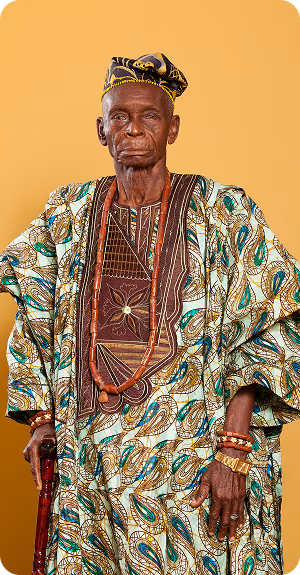
Check out further informationOur venerable ancestor, Ìyá Àbíyè, was born in Abeokuta, Nigeria. She was an ìyálọ́rìṣà with extensive experience in the worship of many òrìṣà, including Èṣù and Ọbàtálá, and a great authority on initiations into rare òrìṣà such as Àbámọdá...
Check out further informationBàbá Egbé was born in Abeokuta, Nigeria. He was raised from a young age to be a priest of the òrìṣà and became an expert in Ẹgbẹ́, Ìrókò, Egúngún, Momó (Igúnnukó), Òrò, and Ọbalúayé, among other deities. As a specialist in òògùn...
Check out further informationÌyá Páláke was from Abeokuta, Nigeria. She was born within the amniotic sac —a very special blessing from Ọbàtálá. From that moment it was clear that she was destined to become an òrìṣà worshipper...
Check out further informationBàbá Awodiran was born in Abeokuta, Nigeria, into a family of notable Ifé priests. His father was an Ifa olúwo in Abeokuta. He became a very active and respected bàbáláwo and a prominent member of the Ifá community.
Check out further informationChief Àkànjí Adébísí was born in Ọ̀ṣọ́gbó, Nigeria, into a family of priests. As he was also destined to become a bàbálọ́rìṣà, he began his training as a child. He was highly skilled and extremely respected...
Check out further informationThe Great Mother, as she was known among the worshippers of Egúngún Dánáfojúrà of Kìṣí, was a specialist in the òrìṣà Bàyánrìn Kìṣí. This great ìyálọ́rìṣà worked at the Great...
Check out further informationThe priestess Ìyá Àlàkẹ́, our spiritual guardian and venerable ancestor, was born into a family of òrìṣà priests and priestesses in Abeokuta, Nigeria. Her mother, the ìyálọ́rìṣà Kẹ́yìndé Ẹnioṣó, founded the Ọmọlú Bùrùkú Temple in Kénta Okebodè...
Check out further informationHe was born into a traditional family; his maternal grandfather was a renowned expert on Ọ̀sanyìn, Egúngún, Ọbalúayé, and Èṣù. His paternal lineage included devotees of Ọbàtálá and Ifá Òrúnmìlà. His father was a bàbáláwo who trained...
Check out further informationBàbáláwo Fabunmi is the spiritual father, master, and guide of our community. He is also the spiritual guardian and one of the venerable ancestors of all those who undergo initiations at the Oduduwa Temple of the Òrìṣà.
Check out further informationÌyá Obimọnúrẹ̀ is the spiritual mother, teacher, and guide of our community. She is also the spiritual protector and one of the venerable ancestors of all those who undergo initiations at the Oduduwa Temple of the Òrìṣà. Born in Abeokuta...
Check out further informationOur venerable ancestor, Ìyá Àbíyè, was born in Abeokuta, Nigeria. She was an ìyálọ́rìṣà with extensive experience in the worship of many òrìṣà, including Èṣù and Ọbàtálá, and a great authority on initiations into rare òrìṣà such as Àbámọdá...
Check out further informationBàbá Egbé was born in Abeokuta, Nigeria. He was raised from a young age to be a priest of the òrìṣà and became an expert in Ẹgbẹ́, Ìrókò, Egúngún, Momó (Igúnnukó), Òrò, and Ọbalúayé, among other deities. As a specialist in òògùn...
Check out further informationÌyá Páláke was from Abeokuta, Nigeria. She was born within the amniotic sac —a very special blessing from Ọbàtálá. From that moment it was clear that she was destined to become an òrìṣà worshipper...
Check out further informationBàbá Awodiran was born in Abeokuta, Nigeria, into a family of notable Ifé priests. His father was an Ifa olúwo in Abeokuta. He became a very active and respected bàbáláwo and a prominent member of the Ifá community.
Check out further informationChief Àkànjí Adébísí was born in Ọ̀ṣọ́gbó, Nigeria, into a family of priests. As he was also destined to become a bàbálọ́rìṣà, he began his training as a child. He was highly skilled and extremely respected...
Check out further informationThe Great Mother, as she was known among the worshippers of Egúngún Dánáfojúrà of Kìṣí, was a specialist in the òrìṣà Bàyánrìn Kìṣí. This great ìyálọ́rìṣà worked at the Great...
Check out further information

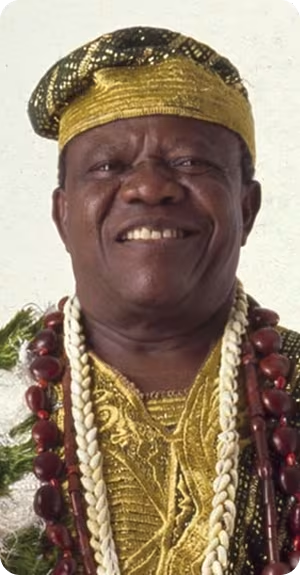
The Yoruba bàbálórìṣà Adéṣínà Síkírù Sàlámì, Bàbá King, our spiritual father, mentor, and guide, was born in Abeokuta, Nigeria. He dedicates his life to the òrìṣà and has become a notable priest and an eminent academic researcher of Yoruba culture, philosophy, and theology. He is an expert in the worship of many òrìṣà, a master in the ẹrindínlógún divination system (the divination with sixteen cowries), and a master in òògùn, the traditional magical-medicinal practices. In Nigeria, he holds several important hierarchical positions, including that of Bàbá Ẹgbẹ́ of the Society of bàbáláwo of Abeokuta and a notable member of the Ògbóni Society.
For over 35 years, Bàbá King has been active in Brazil, where he founded the Oduduwa Cultural Center, the Oduduwa Publishing House, and the Oduduwa Temple of the Òrìṣà, now the world’s largest traditional house of worship for the òrìṣà, with branches in Brazil, Slovenia, Spain, Portugal, and Nigeria.
Bàbá King, PhD in Sociology from the University of São Paulo (USP), plays a fundamental role in recording knowledge from the oral tradition and the Yoruba Traditional Religion, a result of his field research in Nigeria, in reproducing the worship of the òrìṣà the same way it has been practiced for millennia on African soil, and in disseminating reliable information about this culture through lectures, courses, and the publication of books and articles.
He’s published several publications, such as ‘Exu e a Ordem do Universo’ [Èṣù and the Order of the Universe], written in partnership with Professor Dr. Ronilda Iyakemi Ribeiro, a work that inspired the film ‘Exu e o Universo’ [Èṣù and the Universe], which won awards in national and international film circuits; ‘Cânticos dos Orixás na África’ [Chants of the Òrìṣà in Africa], which includes recordings with the pronunciation of prayers and songs in Yoruba; ‘Poemas de Ifá e valores de conduta social entre os Yoruba da Nigéria’ [Ifá Poems and Values of Social Conduct among the Yoruba of Nigeria]; ‘Ogum: Dor e Júbilo nos Rituais de Morte’ [Ògún: Pain and Joy in Death Rituals]; and ‘A Mitologia dos Orixás Africanos’ [The Mythology of the African Òrìṣà].

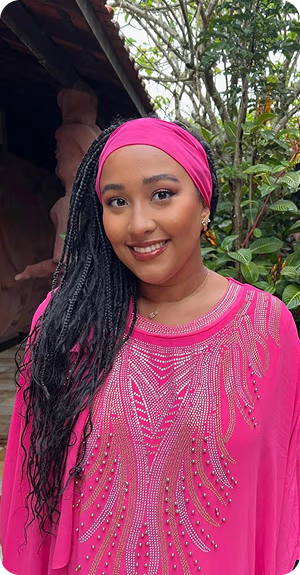
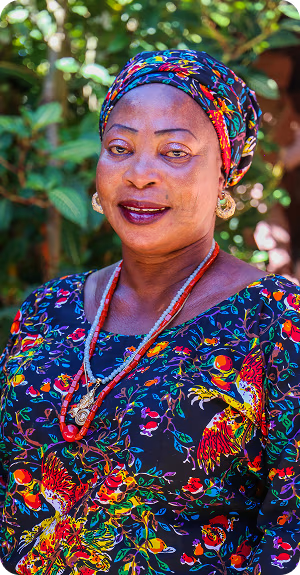
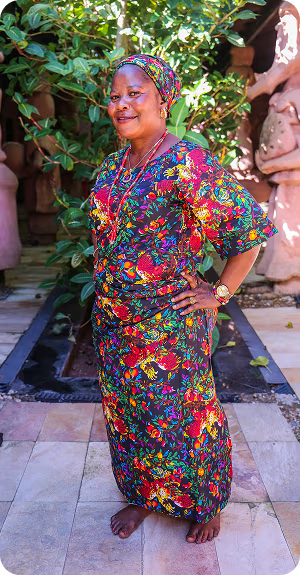
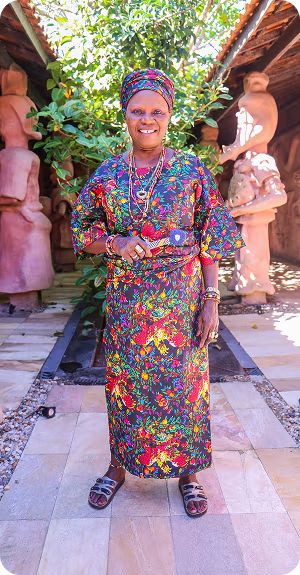
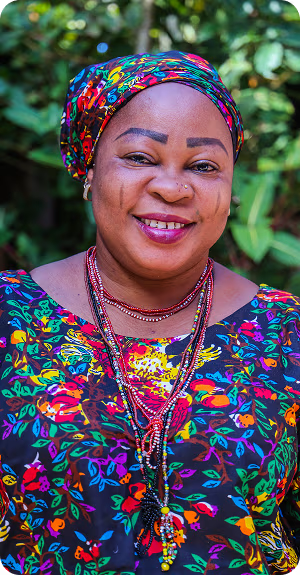
Ìyálórìṣà Ifákẹ́mi (Iyá Ifákẹ́mi) was born in São Paulo, Brazil, in the fourth generation of òrìṣà priests and priestesses on her father’s side. She was initiated into Ifá Ọ̀rúnmìlà and Ìyàmi Òṣòròngà shortly after birth and has been developing her spiritual devotion ever since. With the spiritual prestige she inherited and the guidance and spiritual preparation she accumulated, she decided to follow the path of Ìyálórìṣà. After decades of spiritual devotion and assisting her father, Bàbá King, she chose to fulfill her spiritual mission after completing her studies. She is a doctor, specializing in ophthalmology.

Ìyálórìṣà Ayédùn (Ìyá Ayédùn) was born in São Paulo, Brazil, in the fourth generation of òrìṣà priests and priestesses on her father’s side. She was initiated into Ifá Ọ̀rúnmìlà and Ìyàmi Òṣòròngà shortly after birth and has been developing her spiritual devotion ever since. With the spiritual prestige she inherited and the guidance and spiritual preparation she accumulated, she decided to follow the path of Ìyálórìṣà. After decades of spiritual devotion and assisting her father, Bàbá King, she chose to fulfill her spiritual mission after completing her studies. She is also a businesswoman and holds a bachelor’s degree in business administration.

Baba Ààrẹ, a bàbáláwo, was born in Abeokuta, Nigeria. Due to his exceptional talent, Ifá chose him to become a bàbáláwo while still a child. He is highly qualified and extremely respected in the Nigerian bàbáláwo community, and he mentors many Ifá students. In addition to conducting Ifá initiations and rituals, he is a master of òògùn, the traditional magical-medicinal practices, and an expert on the òrìṣà Orò. He is a notable member of the Ògbóni Society.

Bàbáláwo Bàbá Alárá was born in Abeokuta, Nigeria, into a family of Ifá priests. His destiny was to become a bàbáláwo, and he began his preparation for this mission as a child. Highly qualified and extremely respected in the bàbáláwo community in Nigeria, he mentors many Ifá students. In addition to conducting Ifá initiations and rituals, he is a master of òògùn, the traditional magical-medicinal practices. He is a notable member of the Ògbóni Society.

Bàbáláwo Bàbá Alárá was born in Abeokuta, Nigeria, into a family of Ifá priests. His destiny was to become a bàbáláwo, and he began his preparation for this mission as a child. Highly qualified and extremely respected in the bàbáláwo community in Nigeria, he mentors many Ifá students. In addition to conducting Ifá initiations and rituals, he is a master of òògùn, the traditional magical-medicinal practices. He is a notable member of the Ògbóni Society.

Ìyá Èṣù was born in Abeokuta, Nigeria, and was prepared to become an òrìṣà priestess from childhood. She is an expert in Èṣù, Ọbalúwayé, and Ẹrinlẹ̀, among other òrìṣà. She is an authority on healing procedures and initiation processes, especially in Èṣù and Ọbalúwayé; she highly specializes in performing initiations in various aspects of these òrìṣà—a rare and precious knowledge. She is also a notable member of the Ògbóni Society.

Ìyálóde was born in Abeokuta, Nigeria, into a family of priests devoted to the òrìṣà Ọmọlu/Nana Bùrúkù. From childhood, she has acquired knowledge related to this and other òrìṣà. She is a notable member of the Abeokuta Òrìṣà Community. She is a master in the ẹrindínlógún divination system, which is the sixteen cowrie shells system, and an expert in the worship of many òrìṣà. She is a master in òògùn, the traditional magical-medicinal practices, and a notable member of the Ògbóni Society.

Ìyáruka was born in Abeokuta, Nigeria, into a family of òrìṣà priests and priestesses. She specializes in the Egúngún worship and has earned the title of ìyá-àgan, the highest hierarchical rank in this worship. She is a master in the ẹrindínlógún divination system, which is the divination with sixteen cowries, and an expert in the worship of many òrìṣà. She is a master of òògùn, the traditional magical-medicinal practices, and a notable member of the Ògbóni Society.

Ìyáruka was born in Abeokuta, Nigeria, into a family of òrìṣà priests and priestesses. She specializes in the Egúngún cult and has earned the title of ìyá-àgan, the highest hierarchical rank in this worship. She is a master of the ẹrindínlógún divination system, which is the divination with sixteen cowries, and an expert in the worship of many òrìṣà. She is a master of òògùn, the traditional magical-medicinal practices, and a notable member of the Ògbóni Society.

Ìyá Olósùn was born in Abeokuta, Nigeria. Her father, Ọnà, was born with the àṣẹ of Ọbàtálá, which he passed on to her. On her mother’s side, she inherited the àṣẹ of Egúngún and Ọ̀ṣun. Since childhood, she has dedicated herself to the art of sacred body painting. A young priestess with over 30 years of experience in initiations into òrìṣà, assisting other ìyálórìṣà in these rituals. She is a notable member of the Ògbóni Society. In 2022, the council of Egúngún priests of Ògún State, Nigeria, elected her as ìyá-àgan, the highest position a woman can hold in the Egúngún worship. Since then, she has been the guardian and protector of the priests, norms, and rituals dedicated to Egúngún in Ògún State.

Ìyá Ẹgbẹ́ was born in Abeokuta, Nigeria, into a family of òrìṣà priests and priestesses. She is a renowned specialist in Ẹgbẹ́ and Mọ́mọ́ (Ìgúnnukọ̀) òrìṣà. She holds the title of Ají gbé ìdà, ‘She who carries the sword,’ of the Ìgúnnukọ̀ Society of Abeokuta. She has considerable experience in plant healing through òògùn, the traditional magical-medicinal practices. She has over 40 years of experience with òrìṣà initiations and is a notable member of the Ògbóni Society.

Ìyá Ẹlẹ́fun was born in Abeokuta, Nigeria, into a family of devotees of Ọbàtálá and Ọ̀ṣun. As a child, Ifá guided her parents in initiating her into Ọbàtálá and teaching her to use efún (white chalk) to create sacred body markings. Although she could use materials, her àṣẹ (spiritual power) originates from efún. With many years of experience, she assists other ìyálórìṣà in initiation rituals for the òrìṣà. She is a member of the Ògbóni Society.

Ìyá Ọ̀lọṣun was born in Abeokuta, Nigeria, into a family of òrìṣà priests and priestesses. She specializes in Ọ̀ṣun, Ọbalúwayé, Ìyámi Òṣòròngà, and Egúngún, and is also a master of sacred body painting. With over 30 years of experience, she assists other ìyálórìṣà in òrìṣà initiation rituals. She is a notable member of the Ògbóni Society.

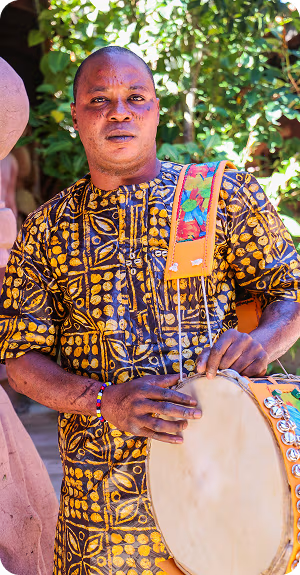
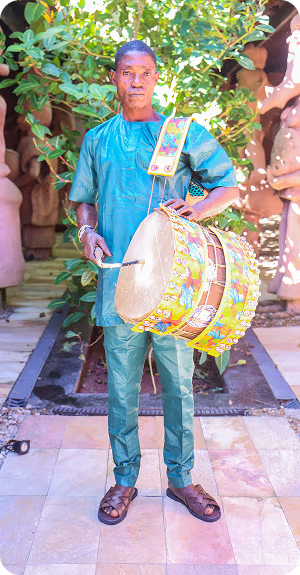
Onílù Ọkọ Ilémoṣú was born in Abeokuta, Nigeria, into a family of master musicians and historians. He was initiated as a child and trained to be an òrìṣà priest ever since. A highly skilled percussionist and singer, he specializes in invocations, especially of Obàtálá, Egúngún, Mọ́mọ́ (Ìgúnnukọ̀), Orò, and Ìyámi Òṣòròngà. As a master of his craft, he passes on the knowledge he has accumulated to his apprentices, helping them become specialists in this religious and artistic field. He is a member of the Ògbóni Society.

Onílù Àyàntúndé was born in Abeokutá, Nigeria. He was initiated as a child and began practicing percussion at an early age, as Ifá revealed to his parents that he had been blessed with the àṣẹ of the òrìṣà Àyàn. A highly skilled percussionist and singer, he specializes in invocations, especially of Egúngún, Mọ́mọ́ (Ìgúnnukọ̀), Orò, and Ìyámi Òṣòròngà. As a master of his craft, he passes on his knowledge to his apprentices, helping them become specialists in this religious and artistic field. He is a member of the Ògbóni Society.

Onílù Gbóríso was born in Abeokuta, Nigeria, into a family of master musicians and historians. He was initiated as a child and has been training to be an òrìṣà priest ever since. He is one of the most talented drum masters in his region, as well as a singer specializing in invocations, especially of Egúngún, Mọ́mọ́ (Ìgúnnukọ̀), Ọ̀ṣun, and Ìyámi Òṣòròngà. As a master of his craft, he passes on the knowledge he has accumulated to his apprentices, helping them to become specialists in this religious and artistic field. He is a notable member of the Ògbóni society.

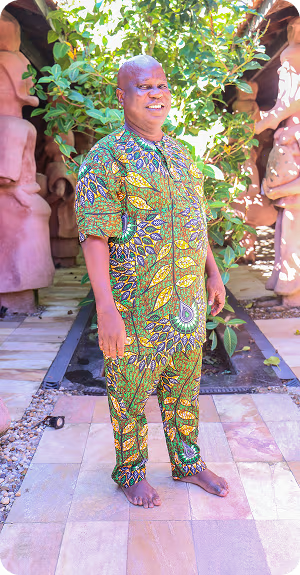
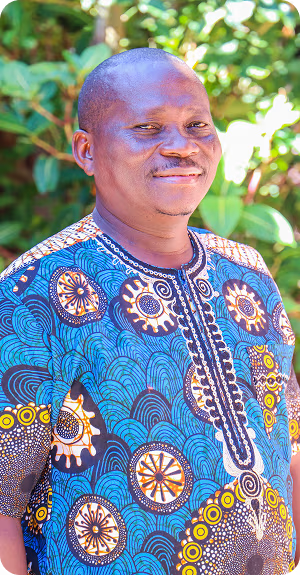
Bàbá Bolá, aṣògún who assists priests in various rituals and was born in Abeokuta, Nigeria, into a family devoted to the òrìṣà Ọbàtálá. He is initiated in Ifá, Ògún, Orò, and Egúngún, among many others. He is also a highly skilled singer for invoking the òrìṣà and a member of the Ògbóni Society.

Ṣóńṣó, aṣògún who assists priests in various rituals and was born in Abeokuta, Nigeria, into a family devoted to the òrìṣà Ìbeji, Ọ̀ṣun, and Ṣàngó. He is initiated into Ifá, Ògún, Orò, and Egúngún, among many others. He is also a highly skilled singer for invoking the òrìṣà and a member of the Ògbóni Society.

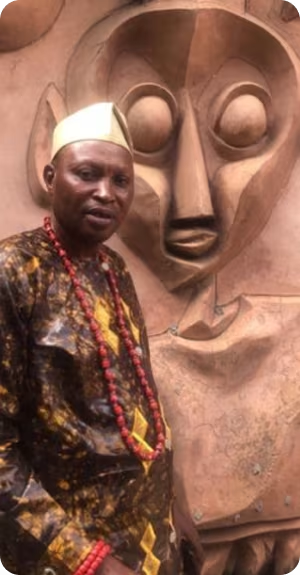
Bàbá Adébísí Àdìsá was born in Ọ̀ṣọ́gbó, Nigeria, into a family of priests, and holds the status of ʻchief.ʼ He was destined to become a priest and follow in the footsteps of his father, ʻchiefʼ Àkànjí Adébísí, and began his preparation for this as a child. His artistic career began in 1980 under his father’s guidance. He is co-author of the magnificent works of the Temple of Ọ̀ṣun in Ọ̀ṣọ́gbó, a UNESCO World Heritage Site, and of the impressive sculptures that are part of the Oduduwa Temple of the Òrìṣà in Brazil, and the Great Family Oduduwa Temple in Nigeria. He mentors many young artists and is a notable member of the Ògbóni Society.

The priestess Ìyá Àlàkẹ́, our spiritual guardian and venerable ancestor, was born into a family of òrìṣà priests and priestesses in Abeokuta, Nigeria. Her mother, the ìyálọ́rìṣà Kẹ́yìndé Ẹnioṣó, founded the Ọmọlú Bùrùkú Temple in Kénta Okebodè, Abeokuta. Ìyá Àlàkẹ́ specialized in Ọmọlú Bùrùkú, Ìyámì Òṣòròngà, Ọbalúayé, and Ẹrinlẹ́, among other òrìṣà. She was a notable member of the Ògbóni Society.

Bàbáláwo Fabunmi is the spiritual father, master, and guide of our community. He is also the spiritual guardian and one of the venerable ancestors of all those who undergo initiations at the Oduduwa Temple of the Òrìṣà.
Bàbá Fabunmi was born in Abeokuta, Nigeria, into a traditional family of bàbáláwos. He began studying Ifá at the age of six and spent thirty years mastering this knowledge before becoming a practicing bàbáláwo. He performed over a thousand Ifá initiations. He was a master of òògùn, the traditional magical-medicinal practices, and possessed profound knowledge of many òrìṣà. He was a respected member of the Ògbóni Society. Among his many precious predictions, he recommended the construction of the Oduduwa Brazil headquarters in Mongaguá and Tocantins in their current locations. He foresaw the importance of the Slovenian group of worshippers in securing the recognition of Yoruba philosophy in Europe. He passed away in 2003 at the age of 83.

Ìyá Obimọnúrẹ̀ is the spiritual mother, teacher, and guide of our community. She is also the spiritual protector and one of the venerable ancestors of all those who undergo initiations at the Oduduwa Temple of the Òrìṣà. Born in Abeokuta, Nigeria, she was prepared from childhood to be an ìyálọ́rìṣà. As a specialist in òògùn, the traditional magical-medicinal practices, she mentored many priests who studied the subject. She was a notable member of the Ògbóni Society. She passed into the ancestral world in 2005.

A sacerdotisa Ìyá Ọmọ Loṣade, de Abeokutá, Nigéria, foi a mestra que passou a base dos segredos do sistema divinatório com 16 búzios para que o Oduduwa pudesse perpetuar sua sabedoria, seu conhecimento e essa tradição como seu sucessor espiritual. Era uma sacerdotisa altamente especializada no orixá Ossaim e detentora de vasto conhecimento das práticas mágico-medicinais tradicionais (‘òògùn’).

Bàbá Egbé was born in Abeokuta, Nigeria. He was raised from a young age to be a priest of the òrìṣà and became an expert in Ẹgbẹ́, Ìrókò, Egúngún, Momó (Igúnnukó), Òrò, and Ọbalúayé, among other deities. As a specialist in òògùn, the traditional magical-medicinal practices, he mentored many priests who studied the subject. He was a notable member of the Ògbóni Society. He passed into the ancestral world in 2021.

Bàbá Awodiran was born in Abeokuta, Nigeria, into a family of notable Ifé priests. His father was an Ifa olúwo in Abeokuta. He became a very active and respected bàbáláwo and a prominent member of the Ifá community. Besides being an expert in Ifá and Òrò initiations and rituals, he was a profound scholar of òògùn, the traditional magical-medicinal practices. He was a prominent member of the Ògbóni society. He passed into the ancestral world in 2021.

Nossa ancestral venerável Ìyá Látìn nasceu em Abeokutá, Nigéria. Era uma sacerdotisa especializada no orixá Obatalá. Como praticante dos procedimentos mágico-medicinais tradicionais (‘òògùn’), era especialista em Ossaim e sua experiência em relação aos orixás Oxum, Iyami Oxorongá, Okê e Egungun eram notáveis. Era membro da Sociedade Ogboni na Nigéria. Passou para o mundo ancestral em 2020.

Our venerable ancestor, Ìyá Àbíyè, was born in Abeokuta, Nigeria. She was an ìyálọ́rìṣà with extensive experience in the worship of many òrìṣà, including Èṣù and Ọbàtálá, and a great authority on initiations into rare òrìṣà such as Àbámọdá, Àgbáyé, and Olúgbomọgùn. A master of òògùn, the traditional magical-medicinal practices, she was a great mentor in the study of plants. She was a notable member of the Ògbóni Society. She passed into the ancestral world in 2018.

Ìyá Páláke was from Abeokuta, Nigeria. She was born within the amniotic sac —a very special blessing from Ọbàtálá. From that moment it was clear that she was destined to become an òrìṣà worshipper and priestess, to which she dedicated her entire life. She had vast experience in the worship of many òrìṣà, including Èṣù and Ọbàtálá, and was highly specialized in many of them, with profound knowledge of Ìyámì Òṣòròngà. She was a great authority in performing initiations into rare òrìṣà, such as Àbámọdá, Àgbáyé, and Olúgbomọgùn. It was said that the Supreme Being had blessed her with the ability to heal and help people. As a specialist in òògùn, the traditional magical-medicinal practices, she mentored many priests who studied the subject. She was an expert in the preparation of magical amulets. She was a notable member of the Ògbóni Society. She passed into the ancestral world in 2021.

Chief Àkànjí Adébísí was born in Ọ̀ṣọ́gbó, Nigeria, into a family of priests. As he was also destined to become a bàbálọ́rìṣà, he began his training as a child. He was highly skilled and extremely respected in the Ògbóni Society as an olúwo of Ìyámì Òṣòròngà. His artistic career began in 1950, and he became a world-renowned master as part of the team that produced artworks for the sacred grove of the Ọṣun temple in Ọ̀ṣọ́gbó, a UNESCO World Heritage Site. Chief Adébísí and his son Adébísí Àdìsá are the sculptors of some magnificent works that are part of the Oduduwa Temple of the Òrìṣà in Brazil and the Great Family Oduduwa Temple in Nigeria. He mentored many young artists. He passed away in 2023.

He was born into a traditional family; his maternal grandfather was a renowned expert on Ọ̀sanyìn, Egúngún, Ọbalúayé, and Èṣù. His paternal lineage included devotees of Ọbàtálá and Ifá Òrúnmìlà. His father was a bàbáláwo who trained hundreds of people and, due to his knowledge, became the Olúwo of the Ìmọ̀ District in the city of Abeokuta. His father's legacy remains recognized by òrìṣà devotees; he was a specialist in the treatment of mental illnesses, a knowledge inherited by Salawu Sàlámi, who became knowledgeable in various specialties of Yoruba religion, spirituality, and Traditional Medicine.

The Great Mother, as she was known among the worshippers of Egúngún Dánáfojúrà of Kìṣí, was a specialist in the òrìṣà Bàyánrìn Kìṣí. This great ìyálọ́rìṣà worked at the Great Family Oduduwa Temple in Abeokuta, Ògún State, Nigeria.
She passed into the ancestral world in September 2025.

O ‘chief’ Àkànjí Adébísí foi um babalorixá nascido em Oxogbô, Nigéria, em uma família de sacerdotes. Como também estava destinado a se tornar sacerdote, começou seu preparo quando era ainda criança. Era altamente qualificado e extremamente respeitado na Sociedade Ogboni como oluwo de Iyami Oxorongá. Sua carreira artística começou em 1950 e ele se tornou um mestre de renome mundial como membro da equipe de artistas envolvidos na produção das obras do bosque sagrado do templo de Oxum em Oxogbô, tombando pela UNESCO como patrimônio cultural da humanidade. O ‘chief’ Adébísí é ainda o autor, junto com seu filho, das magníficas obras que fazem parte do Oduduwa Templo dos Orixás no Brasil e na Nigéria. Atuou como mentor de muitos jovens artistas. Passou para o mundo ancestral em 2023.